Submersible vs. Jet Pumps: Which is Used in Renfrew County?
The vast majority of residential well pump installations in Renfrew County use submersible pumps. These motor-driven units are installed inside the well casing, submerged below the static water level, and push water up to the surface rather than pulling it from above. Because Renfrew County wells typically have static water levels of 30–150+ feet below surface, a submersible pump is the only practical option for most properties.
| Pump Type | Depth Capability | Best For | Common in Renfrew County |
|---|---|---|---|
| Submersible pump | Any depth; 25–600+ ft | Deep drilled wells; most residential installs | ✅ Standard choice |
| Shallow jet pump | Up to ~25 ft suction lift | Very shallow wells, seasonal properties | Rare (shallow wells uncommon here) |
| Deep jet pump | Up to ~100–120 ft | Moderate depth wells; motor stays at surface | Occasionally in older installs |
| Constant pressure pump | Any depth | Multi-bathroom homes; variable demand | Growing in newer installs |
How a Submersible Pump Works
A submersible pump consists of two main components sealed in a cylindrical housing: the electric motor (typically 120V or 240V) and the impeller stages that pressurize water. The unit is suspended inside the casing on a water supply line (usually 1-inch polyethylene) and an electrical cable. When the pressure tank pressure drops below the cut-in threshold, the pressure switch signals the pump to run. The pump draws water from the surrounding aquifer fractures through intake screens and pushes it up the supply line to the pressure tank.
Renfrew County-Specific Consideration: Iron and Pump Life
High iron content — common in many Renfrew County wells — can accelerate pump wear. Iron can deposit on impeller stages over time, reducing efficiency and shortening lifespan. Iron filter installation ahead of the pressure tank helps protect the entire system. Annual check of pump performance (pressure and flow rate) can catch early efficiency loss before it becomes a failure event.
Pressure Tank Fundamentals
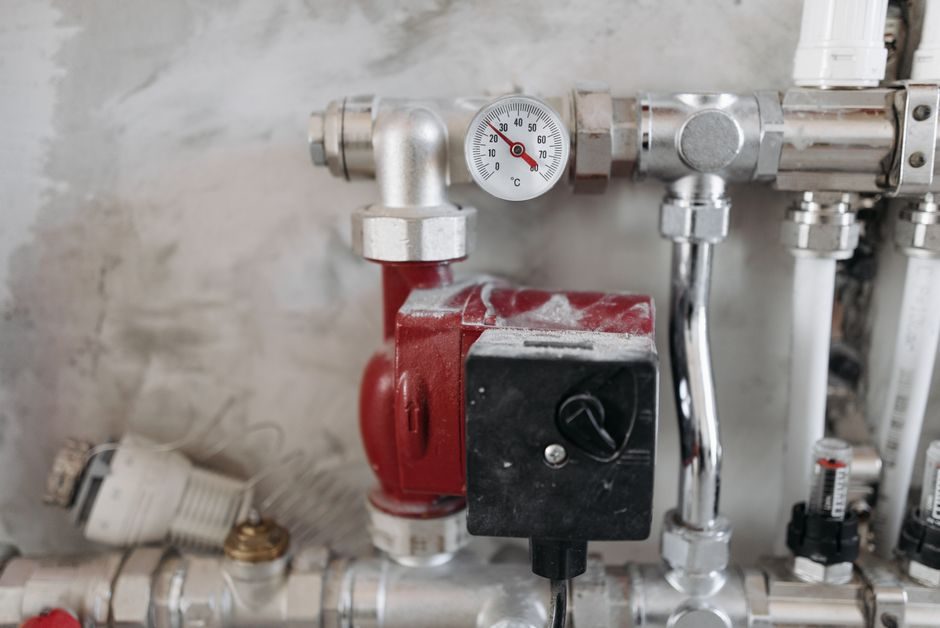
A pressure tank is the buffer between the well pump and the household plumbing. Its job is to maintain system pressure during demand and prevent the pump from cycling on and off for every small draw (like flushing a toilet). Frequent cycling is the primary cause of premature pump failure — a correctly sized pressure tank dramatically extends pump life.
How Bladder-Type Pressure Tanks Work
Modern pressure tanks use an internal rubber bladder or diaphragm to separate the water from a pre-charged air space. When the pump runs, water enters the tank and compresses the air through the bladder. The compressed air pressure maintains household water pressure between pump cycles. When the pressure drops to the cut-in point (typically 40 PSI), the pump turns on; at cut-out (typically 60 PSI), it shuts off. This 40/60 pressure switch setting is standard for most residential installations in Renfrew County.
| Tank Size | Drawdown Volume | Best Application | Approx. Cost |
|---|---|---|---|
| 20-gallon | ~5–6 gallons | Seasonal use, low-demand household | $300–$500 |
| 44-gallon | ~13–14 gallons | Average 3-bedroom residential home | $450–$750 |
| 86-gallon | ~28–30 gallons | Large home; frequent demand peaks | $700–$1,200 |
| 119-gallon | ~40+ gallons | Multiple-bathroom; high daily demand | $1,000–$1,800 |
Bladder Failure: Signs and What to Do
The bladder inside a pressure tank degrades over time. Signs of bladder failure include:
- Pump cycling on and off very rapidly (every few seconds) during normal use — the most common sign
- Loss of pressure when the pump isn't running despite the tank feeling heavy (waterlogged tank)
- Air spurting from faucets when the pump first turns on
- Tank reads low air pressure at the Schrader valve (should read 2 PSI below cut-in)
A waterlogged pressure tank should be replaced. Running on a waterlogged tank puts severe stress on the pump motor through constant short-cycling and can cause premature pump failure.
Signs Your Well Pump Needs Attention in Renfrew County
Renfrew County properties — particularly year-round rural residences and seasonal cottages — put varying demands on well pump systems. Recognizing early signs of pump trouble can prevent an emergency no-water situation.
- Sudden loss of water pressure or no water at all — most dramatic failure mode
- Significant reduction in flow at all fixtures simultaneously
- Air sputtering or gurgling from taps (suggests pump drawing air, possibly low yield or air lock)
- Pump running continuously without cut-off (stuck switch or pump unable to build pressure)
- Pump cycling on and off every 15–30 seconds during normal use (marginal pressure tank or switch issue)
- Electrical breaker for the pump circuit trips repeatedly
- Unusual grinding or rattling from the pump area (bearing wear in surface equipment)
- Discoloured water suddenly appearing (disturbed sediment from pump bearing failure)
- Significantly increased electricity bills with no other explanation
Seasonal Cottage Pump Considerations in Renfrew County
Renfrew County has a large seasonal cottage population in areas like Calabogie, Barry's Bay, Killaloe, and along the Ottawa River and Madawaska River. Cottage wells experience an abrupt start-up in spring and shutdown in fall — conditions that stress pump systems differently than year-round use. A pump that worked fine when the cottage was closed in October may not restart in May due to a failed start capacitor or seized bearing from sitting idle in cold conditions. Spring pump inspection before first use is good practice for seasonal properties.
Pump Sizing and Replacement Costs
Selecting the right pump horsepower depends on well depth, required flow rate, and the height of lift needed (distance from water level to the highest fixture in the house). A pump that is undersized will struggle to maintain household pressure; an oversized pump will short-cycle the pressure tank.
| Pump HP | Typical Depth Range | Flow Capacity | Installed Cost (Approx.) |
|---|---|---|---|
| ½ HP | Up to 150 ft | 8–10 GPM at operating depth | $900–$1,800 |
| ¾ HP | 100–200 ft | 10–15 GPM at operating depth | $1,200–$2,200 |
| 1 HP | 150–300 ft | 12–18 GPM at operating depth | $1,500–$2,800 |
| 1½ HP | 200–400+ ft | 15–25 GPM at operating depth | $2,000–$3,500 |
These are installed costs (pump + well technician labour) for a pump replacement on an existing well in Renfrew County. Labour costs reflect the need to pull the existing pump from depth, which requires specialized pulling equipment. Deeper wells mean more labour time pulling and resetting the pump line.
Related Information
Drilling & Installation
How the well itself is drilled and constructed in Renfrew County's Canadian Shield.
Read GuideWater Testing
How iron and hardness affect your pump system — and what treatment options exist.
Read GuideMaintenance Guide
Annual pump and pressure tank checks adapted to Renfrew County's seasonal extremes.
Read GuideCost Guide
Full breakdown of pump and pressure tank costs as part of a complete well system.
Read Guide