How Rotary Percussion Drilling Works
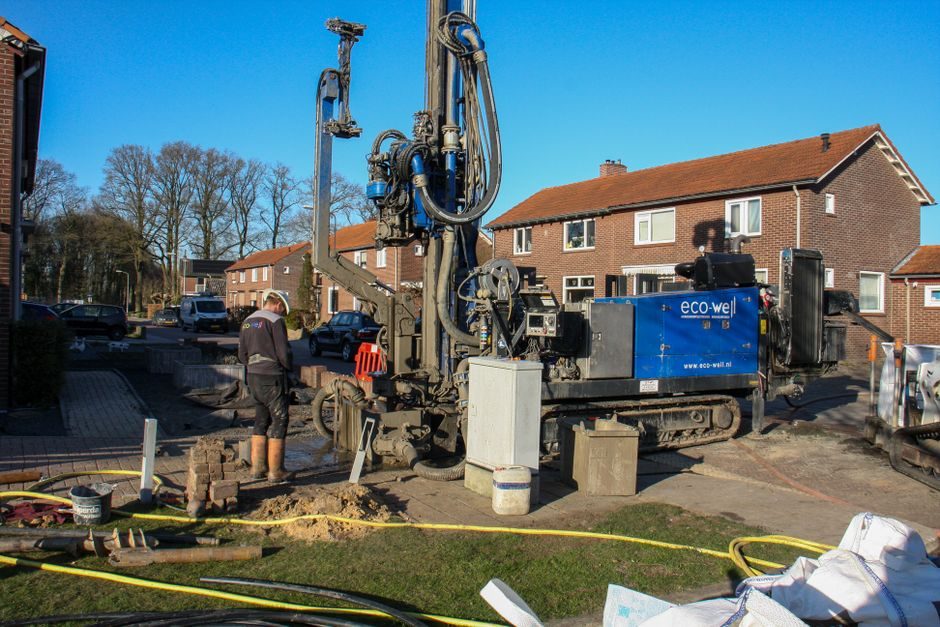
The dominant drilling method used in Renfrew County's Canadian Shield terrain is rotary percussion drilling (also called air rotary or down-the-hole hammer drilling). A truck-mounted drill rig drives a heavy drill bit directly into rock using a combination of rotation and repeated hammer blows driven by compressed air. Rock cuttings are blown up and out of the borehole by the same air stream, keeping the borehole clear and allowing the driller to monitor geological formations as they appear at the surface.
This method is well-suited to Renfrew County's hard Precambrian bedrock. The granite, gneiss, and quartzite of the Canadian Shield are dense and abrasive — conditions where rotary percussion outperforms cable tool drilling. A typical residential well in the Pembroke area can be drilled to 150 feet in a single day under good conditions; harder rock in the Madawaska Highlands may take longer.
What the Driller Is Looking For
In Shield country, the driller watches two things: rock cuttings (what formation is being penetrated) and return water rate (when water starts entering the borehole). Productive water-bearing fractures in Renfrew County bedrock often appear abruptly — the drill may be making slow progress through solid granite, then suddenly encounter a major fracture that produces several gallons per minute. The driller may stop at that point or continue deeper to build yield.
Cable Tool Drilling: Rare but Still Used
An older method — cable tool drilling — uses a heavy chisel bit dropped repeatedly to crush rock and is occasionally used in specific overburden conditions or for low-clearance sites where a large rotary rig can't access. Cable tool is slower but produces less vibration and requires no compressed air. Most active well drillers in Renfrew County now use rotary rigs for all residential work.
Well Casing: Types, Standards, and Installation
The well casing is the steel or thermoplastic pipe that lines the borehole from the surface through the overburden and into bedrock. Its job is to prevent surface contaminants (surface water, soil bacteria, pesticides, fuel spills) from entering the well and to provide a stable structural tube for the pump line.
| Casing Type | Material | Typical Use in Renfrew County | Lifespan |
|---|---|---|---|
| Standard steel casing | Carbon steel, galvanized | Most common; through overburden into bedrock | 40–70+ years |
| Stainless steel casing | 304 or 316 SS | High-corrosivity water, premium installations | 50–100+ years |
| PVC casing | Schedule 80 PVC | Shallow wells, low-pressure applications | 25–50 years |
| Liner casing | Steel or PVC | Rehabilitating old well with collapsed casing | Variable |
Ontario Regulation 903 requires steel casing to extend at least 15 centimetres (6 inches) above finished grade. The casing must be sealed at the surface with a grout or bentonite seal to prevent surface water infiltration — one of the most critical contamination prevention measures in the entire installation.
Casing Diameter
Residential wells in Renfrew County are typically drilled to a 6-inch (152 mm) diameter borehole and fitted with 4- or 6-inch casing. Larger diameter casings allow for bigger pump systems and higher yield development. The borehole is drilled slightly larger than the casing to accommodate the grout seal between casing and rock.
The Drilling Process: Step by Step
Understanding what happens on drill day helps property owners plan and manage expectations. Here is the typical sequence for a new residential well installation in Renfrew County:
- Site assessment: The driller confirms access, identifies setback distances from the septic system, property lines, and any contamination sources. The target drill site is marked.
- Rig setup: A truck-mounted drill rig (typically 30–50 tonnes) accesses the site. The rig requires a cleared pad large enough to level and stabilize. Soft ground near lakeshores or wetlands can be a challenge.
- Overburden penetration: Drilling begins through soil, till, and any weathered rock. Steel casing is driven down as the rig advances, preventing the overburden from collapsing into the borehole.
- Bedrock entry: When the drill hits competent bedrock (usually confirmed by a change in drilling rate and cuttings character), the casing is set at the rock surface and grouted. The borehole continues as an open hole through bedrock.
- Drilling to yield: Drilling continues until adequate water-bearing fractures are encountered. The driller reports yield in gallons per minute as fractures are intersected. In Renfrew County, 1+ GPM sustained is typically the target minimum.
- Well development: Air is used to surge the well and blow out rock dust and cuttings from the fractures, improving yield and clarity.
- Well completion: A sanitary well cap is installed on the casing. The surface seal (grout or bentonite) is applied. The Well Record is prepared for provincial filing.
- Well shocking: A chlorine solution is added to disinfect the new well before pump installation.
What Property Owners Should Have Ready on Drill Day
- Clear access route for the drill truck — minimum 12 feet wide, free of overhead obstacles
- Knowledge of septic system location (for setback confirmation)
- Location of any underground utilities near the drill site
- Contact information for the contractor to reach you during the day
- Understanding that final depth — and final cost — cannot be guaranteed in advance
Renfrew County Geology and Well Completion
Renfrew County sits almost entirely on the Grenville Province of the Canadian Shield, one of the oldest and most structurally complex geological formations on Earth. The dominant rock types — granite, gneiss, and quartzite — are hard, dense, and largely impermeable except where fractured. Groundwater in this environment is stored and transmitted through fractures rather than through the rock matrix itself.
The orientation and density of fractures in Renfrew County's bedrock varies with local structure. Areas along major fault zones and valleys tend to have better-connected fracture networks. Topographic highs (hilltops and ridges) often have fewer productive fractures; valley bottoms and slope breaks tend to be better. This is one reason why local drillers with years of regional experience often have better first-well success rates — they've developed an intuitive understanding of local geology.
The Ottawa Valley portion of Renfrew County — communities like Cobden, Beachburg, and Arnprior — sometimes encounters Paleozoic sedimentary rock (limestone, dolostone) beneath the till overburden before reaching Shield granite. Sedimentary rock aquifers behave differently: they can produce higher yields but may also carry higher hardness and coliform risk from surface infiltration along bedding planes.
Hydrofracturing: When the Well Needs Help
If a completed well produces inadequate yield, hydrofracturing (sometimes called hydrofracking — not related to oil and gas fracking) is a technique used to improve yield in bedrock wells. High-pressure water is pumped into the sealed borehole to open and extend existing fractures. Success rates in Renfrew County's Shield rock are variable: some wells see yield double or triple; others show little improvement. Hydrofracturing typically costs $1,000–$3,000 and is not guaranteed.
Related Information
Pumps & Pressure Tanks
What type of pump goes into a Renfrew County well and how pressure tanks work.
Read GuideFull Cost Breakdown
Detailed cost table for all components of a new well installation in Renfrew County.
Read GuideOntario Regulations
Licensing requirements, setback rules, and the Well Record filing process.
Read GuideHiring Guide
How to verify a contractor's Ontario licence and what to ask before signing anything.
Read Guide